
Veneers.
More Than Whitening.
At A to Z Dental, we use veneers to reshape, refine, and restore smiles with a level of precision that whitening simply cannot provide. Every treatment starts with understanding what bothers you about your smile and determining whether veneers are the right way to address it.
Need more information before starting treatment? Scroll down to learn how veneers work and what to expect during the process.

What Are Dental Veneers
and What Can They Correct?
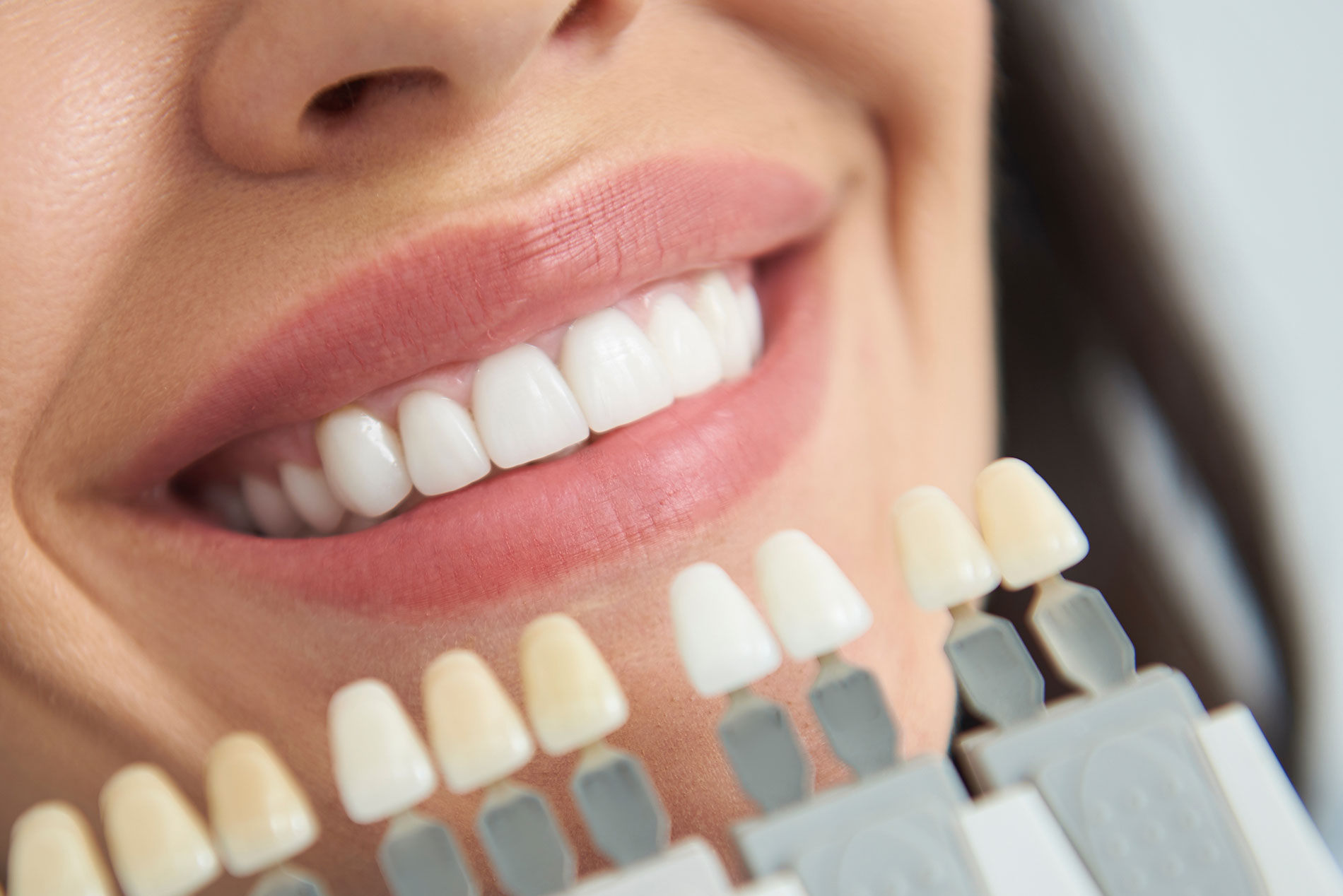
Dental veneers are custom-made restorations placed on the front surface of the teeth to improve their appearance. Veneers are usually very thin, often measuring less than 1 millimeter, which allows them to create a noticeable visual improvement while preserving as much natural tooth structure as possible. They are commonly used in cosmetic dentistry to correct discoloration, small chips, worn edges, gaps, uneven shape, and minor cosmetic misalignment.
At A to Z Dental, we offer ceramic, zirconia, and E.max veneers. Each material offers unique advantages, and the right choice depends on your cosmetic goals, bite, tooth structure, and long-term expectations. Each veneer is designed individually so the color, shape, size, and translucency match the patient’s smile goals and facial features.
Veneers may be recommended for patients who want to improve:
- Tooth discoloration
- Uneven tooth shape
- Small chips or cracks
- Gaps between front teeth
- Worn edges
- Old front-tooth restorations
- Smile confidence
Why Patients Choose A to Z Dental for Veneers
Your smile is handled by doctors who understand both dental function and aesthetics. Veneer treatment requires precision, planning, and a strong eye for natural-looking results.
No two smiles should look the same. We customize veneer shape, color, and proportions based on your teeth, facial features, and personal goals.
We use high-quality materials and digital diagnostics to support accurate planning, comfortable treatment, and long-term results.
Our goal is to create veneers that enhance your smile without making it look artificial. The best cosmetic dentistry should still look like you.
Types of Veneers We Offer

Types of Veneers We Offer
Ceramic veneers cover the visible front surface of the tooth and allow us to change color, shape, size, and overall smile symmetry.
- Why patients choose them: They closely mimic natural enamel and provide excellent aesthetics.
- Key benefit: They create one of the most natural-looking cosmetic results available in modern dentistry.
Zirconia veneers use an exceptionally strong ceramic material capable of withstanding greater biting forces.
- Why patients choose them: We often recommend zirconia when additional durability becomes a priority.
- Key benefit: They offer superior strength while still providing excellent cosmetic improvement.
E.max veneers use lithium disilicate glass ceramic, one of the most advanced materials in cosmetic dentistry.
- Why patients choose them: The material combines strength with exceptional translucency, allowing light to pass through similarly to natural enamel.
- Key benefit: They provide outstanding aesthetics while maintaining excellent durability.
Veneer Process

The process begins with a consultation and discussion of your smile goals. We evaluate tooth color, shape, gum health, bite function, facial proportions, and overall smile balance to determine whether veneers are the right solution for your needs.

A very thin layer of enamel is typically removed to create space for the veneers and help them fit comfortably and naturally. The amount depends on the condition of the teeth and the material selected.

Digital scans and detailed impressions allow us to design veneers around your facial features, smile line, and existing teeth. Shape, size, shade, and proportions are refined before the veneers move into fabrication.

Depending on the treatment plan, temporary veneers may be placed while the final restorations are being fabricated. This allows patients to maintain function and aesthetics throughout the process.

Once the veneers are ready, we verify their fit, color, shape, and overall appearance. The teeth are then prepared and the veneers are bonded securely into place using specialized dental materials.

The final visit focuses on bite refinement, comfort, and finishing details. We remove any excess cement, evaluate how the veneers function during chewing and speaking, and make any adjustments necessary before polishing the final restorations.
Are Veneers Right for You?
- Stubborn tooth discoloration Teeth with stains that do not improve enough with whitening.
- Mild shape concerns Teeth that appear too small, uneven, worn, or asymmetrical.
- Small gaps Minor spacing between front teeth.
- Small chips or enamel defects Visible imperfections that affect smile aesthetics.
- Old cosmetic restorations Front-tooth fillings or bonding that no longer look natural.
- A desire for a more balanced smile Patients who want a refined cosmetic improvement without major dental reconstruction.
- Active tooth decay We need to treat cavities before placing veneers.
- Gum disease Healthy gums provide the foundation for successful cosmetic treatment.
- Significant bite problems Severe alignment issues may require orthodontic treatment first.
- Bruxism (teeth grinding) Heavy grinding can place excessive force on veneers and increase the risk of damage.
- Insufficient enamel Veneers rely on healthy enamel for predictable bonding.
- Poor oral hygiene Long-term success depends on proper home care and routine dental visits.
- Extensive tooth damage Severely compromised teeth may require crowns or other restorative treatment instead.
- #Cavity Treatment
- #General Dentistry
A cavity doesn’t go from nothing to pain overnight. It moves slowly, layer by layer, often without any clear warning at first. ...
- #Dentistry History
- #Dentures
Replacing missing teeth isn’t a modern idea — people have been trying to solve that problem for thousands of years. What’s changed ...

- #Dentistry History
A trip to the dentist today looks nothing like it did thousands — or even a few hundred — years ago. Modern dentistry is built on ...

Periodontitis isn’t something that shows up overnight. It develops gradually, often starting with something as simple as plaque ...